Building Civic Technology with Communities: GTIN Pilot Tests the “GTIN Civic Bridge Innovation” to Strengthen Digital Democracy in Northern Uganda
Written By: Michelle Thuo
(Technical Lead – AI & Blockchain Technologies | Manager, Data & Innovations)
Under its Digital Democracy Initiative in Sub-Saharan Africa (DDISA)-supported project, the Global Tech Inclusion Network (GTIN) has made significant progress in the development of the GTIN Civic Bridge Innovation, an inclusive civic tech innovation designed to strengthen digital democracy, enhance citizen participation, and promote transparency and accountability in local governance in Northern Uganda.
Designed around the realities of rural communities, the GTIN Civic Bridge Innovation seeks to bridge the gap between citizens and duty bearers by providing accessible digital channels through which people can raise concerns, share feedback, and engage with local governance processes. Its design prioritises the needs of underserved communities, including women, young people, persons with disabilities, and people living in areas with limited internet connectivity.
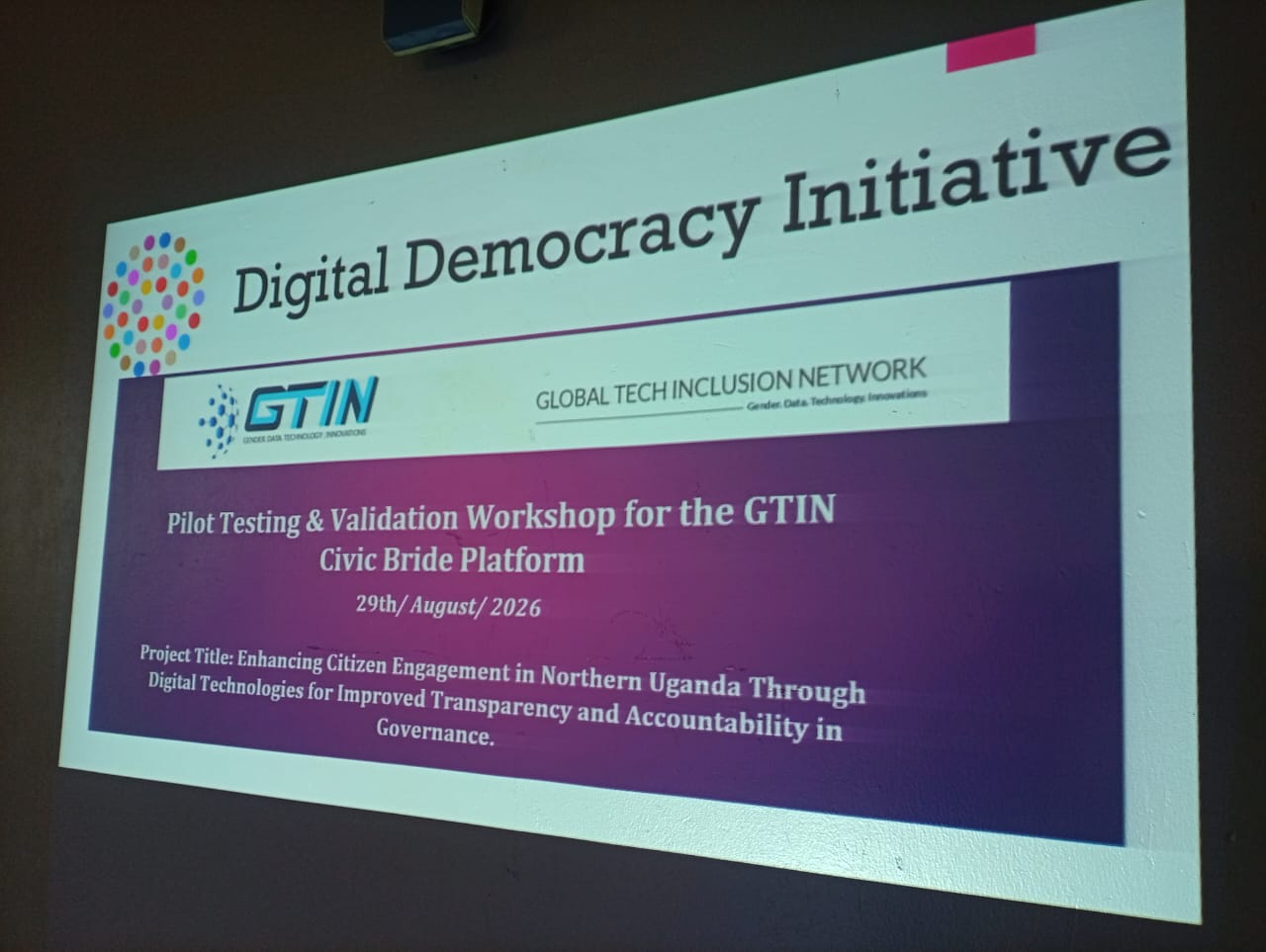
As development progressed, GTIN recognised that building a solution for communities requires more than technical expertise. It requires listening to the people expected to use it. Before proceeding with a wider rollout, GTIN therefore organised a pilot testing workshop to gather feedback from target beneficiaries and stakeholders, assess the innovation's usability, and identify areas requiring refinement.
Putting Civic Bridge to the Test
The pilot testing workshop provided an opportunity for participants to interact with the Civic Bridge innovation, explore its functionality, and share practical recommendations based on their experiences and community needs. Their feedback offered valuable insights into how the innovation could better respond to the everyday governance challenges faced by rural communities.
The exercise reaffirmed the importance of developing civic technology that reflects local realities rather than assuming that a one-size-fits-all solution will work for everyone. Feedback from the participants highlighted areas where improvements could make the platform more relevant, accessible, and responsive to the people it is intended to serve.
One of the key lessons from the workshop was the value of innovating with communities rather than simply designing solutions for them. Community members often identify practical details, usability challenges, and unmet needs that may not be apparent during the initial design and development stages. Incorporating these perspectives helps strengthen local ownership, improve usability, and create a stronger foundation for adoption.
Expanding Reporting Channels to Address Community Concerns
Among the notable recommendations raised during the pilot testing was the integration of additional reporting channels for online gender-based violence (OGBV), gender-based violence (GBV), and corruption-related concerns. These recommendations reflect issues that directly affect the safety, dignity, rights, and livelihoods of people in rural communities. Integrating appropriate reporting pathways into the Civic Bridge innovation could help make it easier for citizens to raise concerns and identify relevant channels for seeking support or accountability.
The proposed additions will require careful consideration of confidentiality, data protection, user safety, and appropriate referral mechanisms, particularly for sensitive reports involving gender-based violence and online abuse. These safeguards will be essential to ensuring that the platform remains accessible while protecting those who use it.
The recommendations demonstrate how community participation can help expand the relevance of a civic tech innovation beyond its original design, making it more responsive to the interconnected challenges citizens experience in their daily lives.
What Comes Next?
Following the pilot testing workshop, GTIN's Data and Innovations team will incorporate the feedback received and undertake further refinements to Civic Bridge. The next phase will involve testing the improved innovation with relevant duty bearers to assess its functionality and suitability for facilitating citizen engagement and communication with local governance structures.
GTIN will also conduct further testing with selected community members to validate the changes, gather additional feedback, and identify any remaining gaps before a wider rollout. This iterative approach will help ensure that the innovation continues to evolve in response to the needs of its intended users.
Advancing Inclusive Digital Democracy
The GTIN Civic Bridge Innovation represents GTIN's commitment to leveraging inclusive digital technologies to strengthen citizen participation and improve transparency and accountability in local governance. By combining accessible digital channels with community-driven design and engagement with duty bearers, the initiative seeks to create more practical pathways for citizens to communicate their concerns and participate in governance processes.
While further testing and refinement remain essential, the pilot workshop marks an important milestone in moving the Civic Bridge innovation from development towards practical application. Its potential lies not only in the technology itself, but also in the collaborative process through which communities help shape a solution that responds to their needs.
GTIN extends its sincere appreciation to the Digital Democracy Initiative in Sub-Saharan Africa (DDISA) for the financial support that has helped bring this innovation to life. This support is enabling GTIN to advance its work towards a more inclusive digital democracy in Northern Uganda, where communities can access meaningful opportunities to participate in governance and hold duty bearers accountable.
At GTIN, we believe that sustainable civic technology begins with listening to communities, and succeeds when their experiences help shape the solutions designed for them.