The Importance of Local Community Radios in Strengthening Local Digital Democracy Initiatives
Written By: Brian Rachkara Otim
(Chief Technology Officer (CTO))
Democracy is strongest when citizens have meaningful opportunities to participate in decisions that affect their lives. In many rural communities, however, barriers such as limited internet connectivity, low digital literacy, language differences, and the high cost of accessing digital services can prevent citizens from fully engaging with their leaders and public institutions.
This is where local community radio remains a powerful tool for strengthening local democracy initiatives.
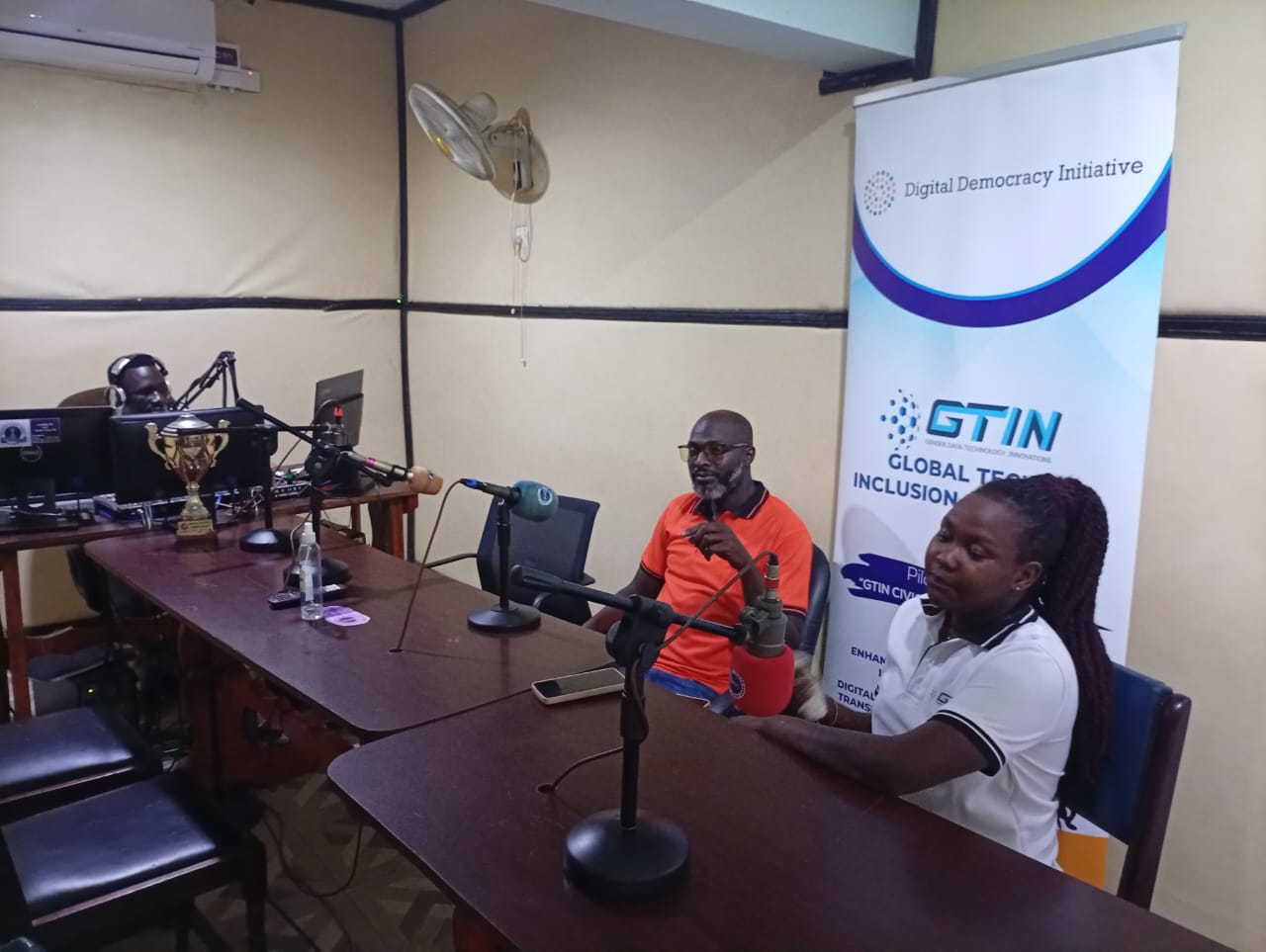
Last week (10th – 15th August 2026), the Global Tech Inclusion Network (GTIN) field team held a community radio talk show at a local community radio station in Apac District, Northern Uganda. The engagement formed part of the GTIN Digital Democracy project, “Enhancing Citizen Engagement in Northern Uganda Through Digital Technologies for Improved Transparency and Accountability in Governance.”
The radio talk show provided an important opportunity to broaden the reach of the project beyond those already using digital platforms and, importantly, to listen directly to community members. Through live discussions and audience participation, citizens were able to share their experiences, raise concerns, ask questions, and provide critical feedback on how technology can better support their participation in local governance.
Bridging the Digital and Democratic Divide
Under the GTIN – Digital Democracy Initiative in Sub-Saharan Africa (DDISA)-supported project, GTIN is piloting the GTIN Civic Bridge Platform, an innovative civic-tech solution designed to amplify action for civic space and inclusive democracy.
The platform seeks to strengthen digital citizen engagement, transparency, accountability, and responsiveness in public service delivery across Northern Uganda. At its core, the Civic Bridge establishes a two-way communication channel between citizens and duty bearers.
Through the platform, citizens will be able to report service delivery concerns, submit queries and complaints, and receive official feedback. This creates a more structured feedback loop between communities and local authorities, helping ensure that citizens' concerns do not simply disappear after they are raised.
However, digital democracy cannot succeed simply by creating a digital platform. It must respond to the realities of the communities it seeks to serve.
Many rural and underserved communities continue to experience limited internet connectivity and low digital literacy, while a significant number of people still rely on basic feature phones rather than smartphones. For this reason, the GTIN Civic Bridge Platform is being designed with inclusion and accessibility at its centre.
The platform will support web and mobile interfaces, including functionality suitable for low-connectivity and offline environments. It will also integrate USSD and SMS, allowing citizens to participate using both smartphones and basic feature phones.
Language and literacy barriers are equally important. The platform will support English and relevant local languages, with potential for expansion to additional languages and communities. Access will also be free of charge, ensuring that cost does not become another barrier to civic participation.
Why Community Radio Still Matters
Despite the rapid growth of digital technologies, community radio remains one of the most accessible communication channels in rural Uganda. It reaches people who may have limited access to smartphones, internet services, or digital platforms and provides an opportunity for communities to engage collectively in conversations about issues affecting their daily lives.
For digital democracy initiatives such as GTIN's Civic Bridge Platform, community radio is therefore not a competing technology, it is a critical complement to digital engagement.
Radio can introduce communities to new digital tools, explain how they work, address misconceptions, and encourage citizens to use them. At the same time, radio discussions can bring community concerns into the public domain and generate conversations that inform both citizens and duty bearers.
The recent radio engagement in Apac demonstrated this important connection between traditional and emerging technologies. By combining the broad reach of community radio with the two-way functionality of the civic tech innovation, GTIN is working to create multiple pathways through which citizens can make their voices heard.
Technology Must Serve People
Ultimately, digital democracy is not about technology for its own sake. It is about using technology to make democratic participation more meaningful, inclusive, and responsive.
The experience in Apac reinforces an important lesson: building a digital platform is only one part of strengthening civic participation. Building trust, creating awareness, listening to communities, and ensuring that citizens can participate through channels they already understand and use are equally important.
As GTIN continues to pilot the Civic Bridge Platform across Northern Uganda, community radio will remain an important bridge between technology and the people it is designed to serve.
When local communities have the tools, platforms, information, and spaces to engage with their leaders, democracy becomes more than a principle, it becomes something people can experience in their everyday lives.